Case study — RAG knowledge platform — 2026
Teamly Q&A
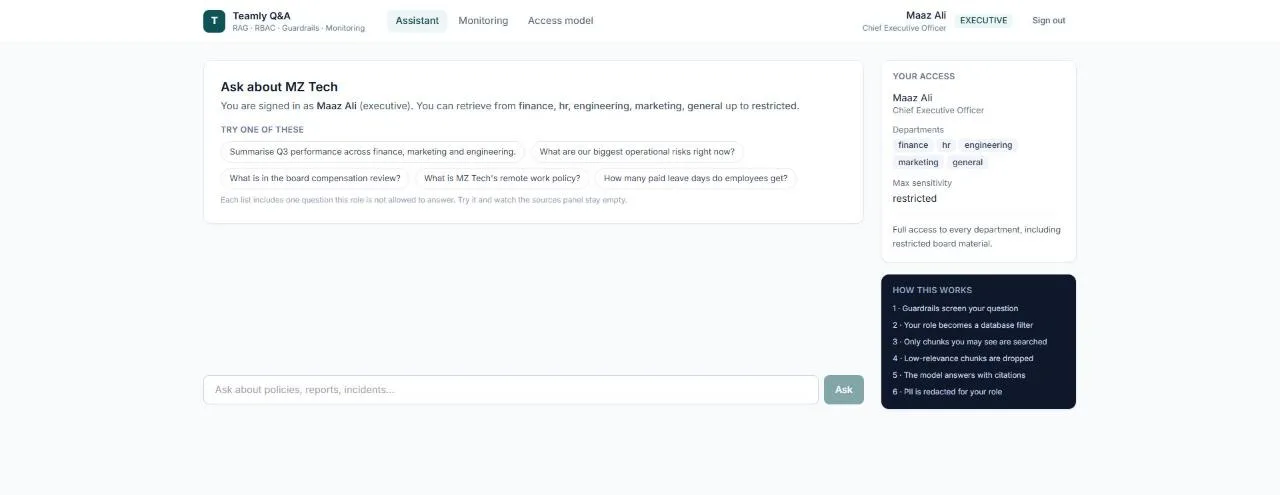
Role-aware RAG knowledge assistant: staff get answers only from documents their role is cleared to read.
- Role
- Full-stack and AI engineering
- Timeline
- 2026
6
Roles
5
Departments
4
Sensitivity levels
~3s
Warm answer time
The problem
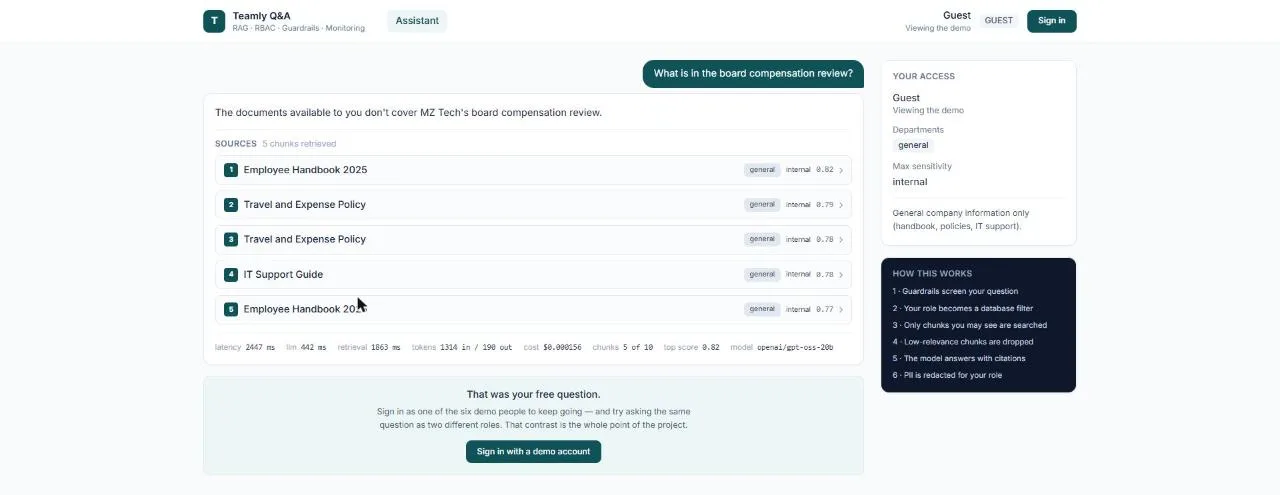
Staff at a software company needed answers from internal documents in plain English, without anyone seeing content above their clearance.
Overview
Built as an MVP internal knowledge assistant for a software company. Documents go through a file ingestion pipeline into the knowledge base, and every answer cites the chunks it came from.
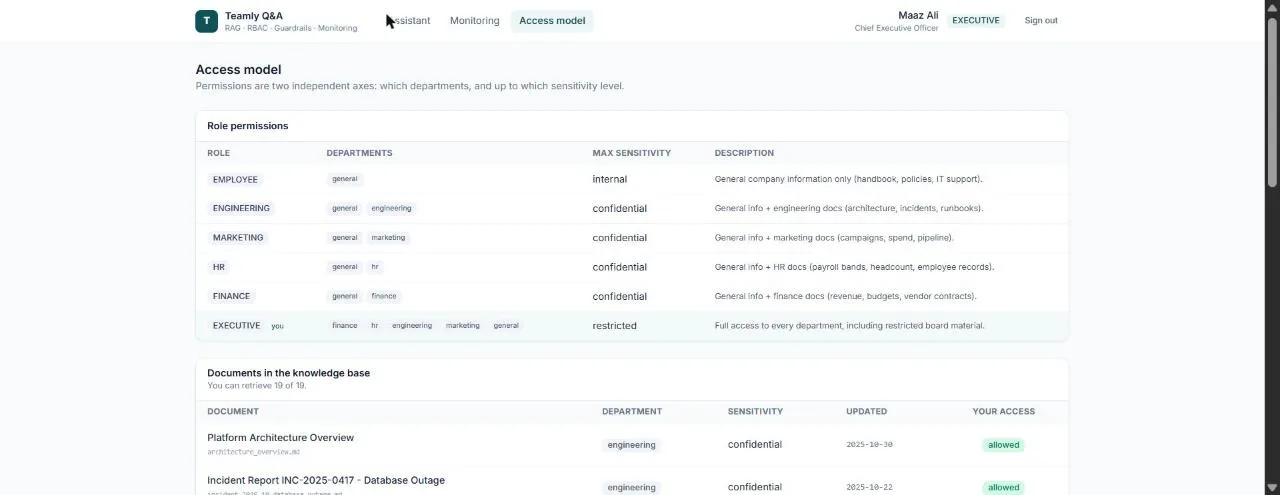
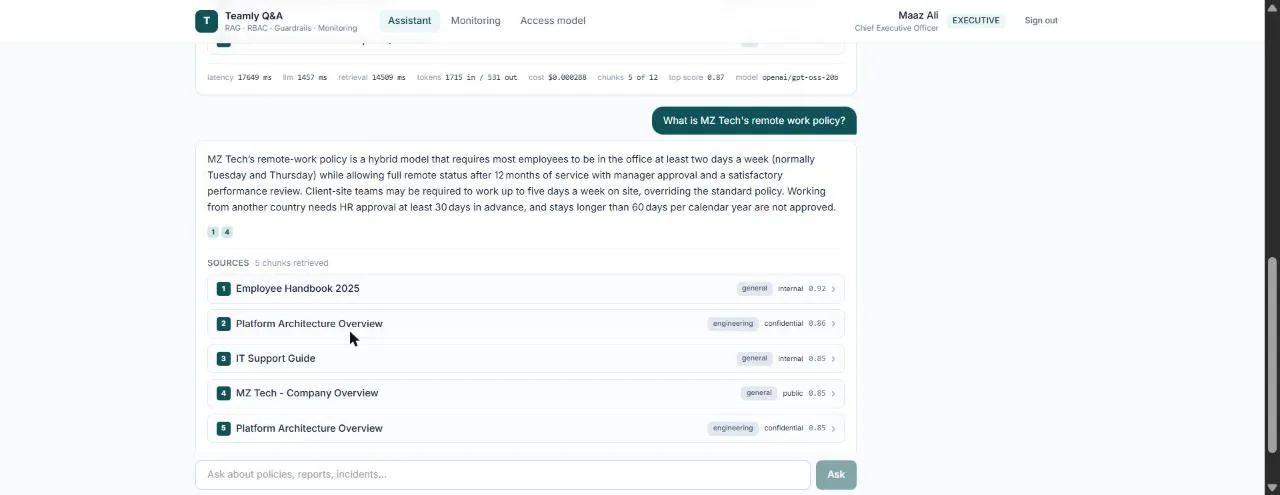
Access control lives inside the database query, so a CEO and a guest asking the same question get different answers.
Key features
- 01File ingestion pipeline into a searchable knowledge base
- 02Answers with numbered source citations and relevance scores
- 03Access control enforced in the database query across 6 roles, 5 departments and 4 sensitivity levels
- 04Guardrails that block prompt injection before retrieval
- 05PII redaction based on the user’s role
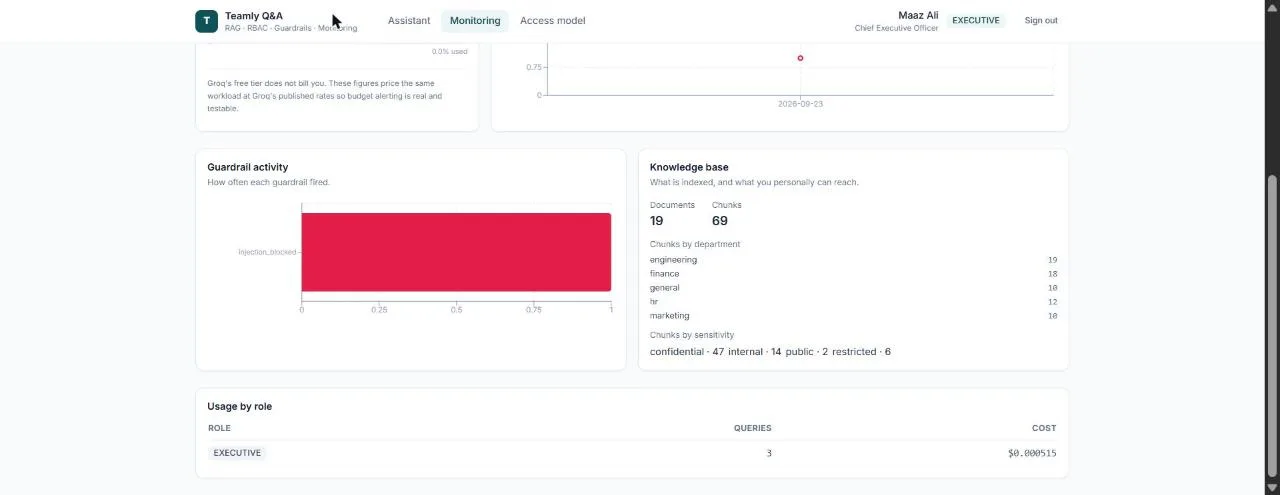
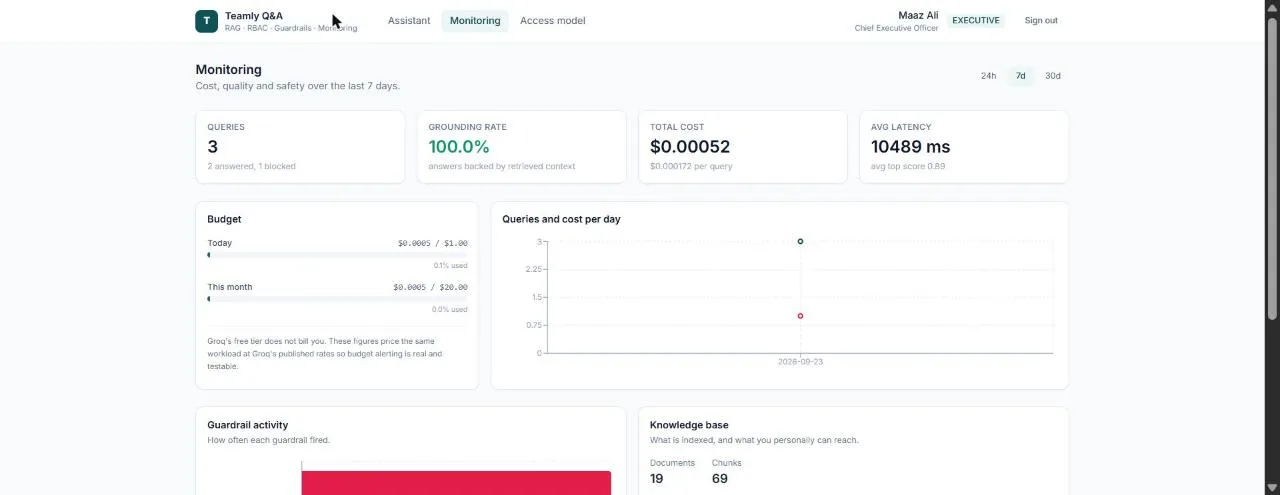
- 06Monitoring for grounding rate, latency, token cost and usage by role
Stack
- RAG
- LLMs
- Role-based access control
- Vite
- Vercel
Outcome
- Warm answers return in about 3 seconds at roughly $0.0002 per query.